
Know what every roof actually made you. LessAccounting gives you a dedicated bookkeeper who learns your business and handles your monthly books (supplier bills, crew and subcontractor costs, insurance-claim payments and deposits), so you get clean, CPA-ready numbers while you run jobs.
- Dedicated bookkeeper
- QuickBooks Online included
- No long-term contract
LessAccounting provides done-for-you monthly bookkeeping for roofing contractors: a dedicated bookkeeper reconciles your bank and card accounts, records supplier bills, crew and subcontractor costs, tracks subcontractor payments so your CPA has the 1099 data, records insurance-claim payments and customer deposits correctly, and delivers a monthly financial report. Plans start at $299/month.
Why roofing books get messy
Roofing doesn’t fit a generic bookkeeping setup. Here’s what we plan for from day one.
Job costs scattered across suppliers and cards
Shingles, underlayment, flashing, dumpsters, permits and equipment rentals hit different accounts and credit cards. Unless each cost is tied to a job, your P&L shows a total, not which roofs made money.
Subcontractors and 1099-NEC season
Tear-off crews, gutter installers and other subs often get paid fast, sometimes before anyone collects a W-9. For payments made in 2026, the general federal reporting threshold for Form 1099-NEC is $2,000 per recipient, subject to applicable exceptions. Collect W-9s and payment-method details so your CPA can determine the reporting required. See the IRS guidance on payment reporting thresholds.
Insurance claims and supplements
A single storm job can bring an ACV check, a later depreciation release, approved supplements, the homeowner’s deductible and a check co-payable to a mortgage company. Record it as one lump and you can’t tell what’s still owed on each claim.
Deposits and progress billing
Track customer deposits, progress invoices and retainage separately for each job. These records help you distinguish cash received, amounts billed and balances still outstanding. How a deposit appears in your financial reports depends on your accounting method and the work performed; its tax treatment can differ. Agree the treatment with your bookkeeper and CPA, then apply it consistently. Commercial jobs may also involve AIA-style pay applications and retainage held until the contract conditions are met.
Storm seasons and slow months
Roofing revenue moves with the weather and the storm calendar. A busy quarter can hide thin margins, and a slow winter can squeeze payroll. Monthly, up-to-date books let you plan cash before the slow season arrives, not during it.
Sales tax on materials, trucks and equipment
Sales tax treatment depends on the state, type of work, property and contract. For example, the Texas Comptroller’s repair and remodeling guidance distinguishes residential jobs from nonresidential jobs; its residential lump-sum and separated-contract examples should not be applied to every roofing project. Keep the job classification and supporting invoices available for your CPA. Track vehicles and equipment separately from the materials charged to individual jobs.
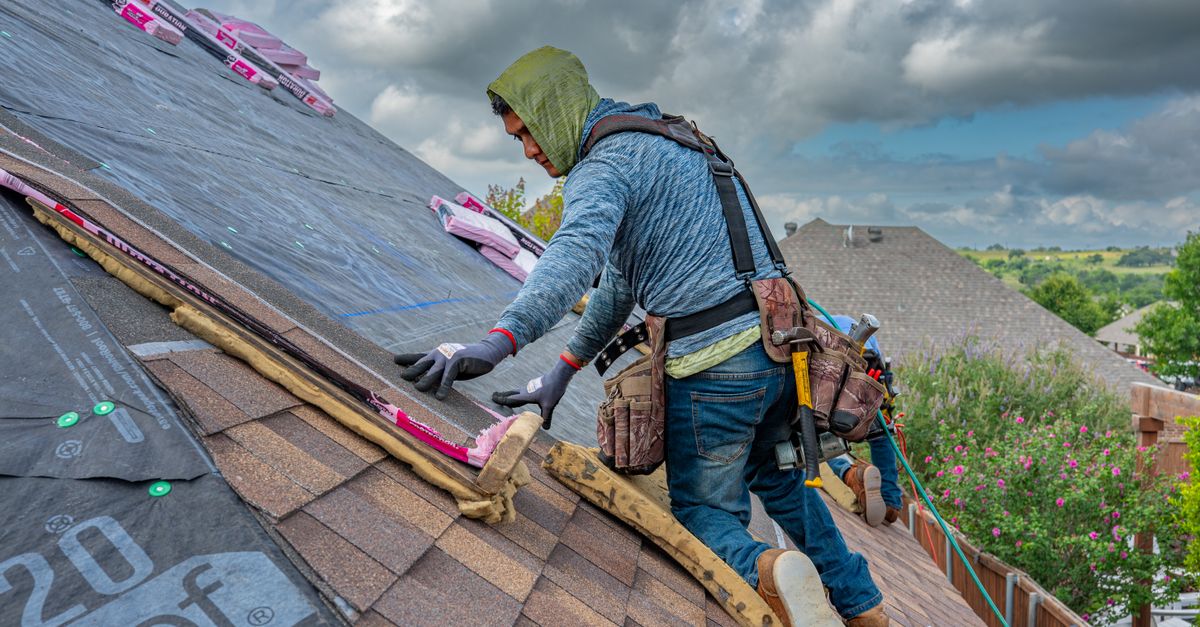
What we handle every month for roofing companies
- Bank, card and supplier-account reconciliation: every account matched, every month
- Transaction categorization in roofer terms: materials, disposal, permits, crew labor, subs, equipment and vehicles in their own accounts
- Job costing, if you need it: it needs QuickBooks Online Plus or Advanced, which you upgrade to and pay for; your bookkeeper then keeps your books by job in it
- Subcontractor payments tracked all year: we prepare the 1099 data for your CPA, who files the forms
- Sales tax figures for your CPA: sales tax recorded and the figures prepared for your CPA to file
- Insurance-claim and deposit recording: ACV, depreciation, supplement and customer-deposit payments matched to the right job, with deposit treatment consistent with the accounting method agreed for your books.
- Customer invoicing and AR follow-up support (Growth: up to 10 invoices/month; Business Pro: up to 20)
- Monthly financial reporting package: P&L, balance sheet and cash view your CPA, bank or bonding agent can use, plus quarterly financial consultations on Business Pro
- A dedicated bookkeeper who learns your business, on every plan
- QuickBooks Online included in every plan
Payroll (priced by number of employees) and tax prep (quoted after we review your last two years of returns) are separate services, quoted independently. See Services.
How it works
- Book a 20-minute call Tell us about your crews, your suppliers and the kind of jobs you run: residential, commercial, insurance work.
- Onboarding We connect your accounts and set up a roofing-ready chart of accounts. Behind on your books? Catch-up is a separate project, priced by how many months behind you are (see how bookkeeping catch-up works).
- Monthly close Every month we reconcile, categorize and match costs and payments to jobs. Books are ready within 15 business days.
- Reports and check-ins You get your monthly financial report and direct access to your bookkeeper, plus quarterly consultations on Business Pro.
The Roofing Job Close-Out Checklist
Use this practical checklist to review a roofing job before closing it in your records. Adapt it to your contracts, accounting method and the information your bookkeeper and CPA need.
The LessAccounting Roofing Job Close-Out Checklist
8 checks before a roof is “done” in your books
- Final invoice sentIncludes every approved change order and insurance supplement.
- Supplier bills matchedAll material bills, returns and credits tied to this job.
- Job overhead codedDumpster/disposal, permits and equipment rental charged to the job, not general overhead.
- Subs squared awaySub invoices matched, W-9 on file, certificate of insurance current.
- Insurance money reconciledACV, depreciation release, supplements, deductible and any mortgage-company check accounted for.
- Deposits reviewed: Customer deposits, amounts earned and any remaining balance agree with the job records and your accounting method.
- Sales tax checked: Treatment reflects the job’s state, type of work, property classification and contract terms.
- Margin reviewedEstimate vs. actual by materials, labor and subs, with big variances noted for the next bid.

DIY, a generic bookkeeper, or LessAccounting?
| Doing it yourself in QuickBooks | Generic bookkeeper | LessAccounting for roofers | |
|---|---|---|---|
| Your time | Evenings and weekends after jobs | Less, but you still explain roofing basics | A dedicated bookkeeper who learns your business handles the monthly work |
| Job costing | Only if you set it up and keep it up | Depends on construction experience | Costs by job (QuickBooks Online Plus or Advanced, paid by you) |
| Subcontractor 1099s | Easy to fall behind on W-9s | Varies | Payments tracked all year, 1099 data ready for your CPA |
| Insurance claims and deposits | Often booked as lump sums | Varies | Deposits, ACV, depreciation and supplements recorded separately |
| Storm season / slow season | Books often months behind | Varies | Monthly close, books ready within 15 business days |
| Price | Software subscription + your time | Varies (hourly or flat) | Plans from $299/mo (scoped on a demo call), QuickBooks Online included, no long-term contract |
| CPA-ready at tax time | Often needs cleanup | Varies | Monthly reporting package all year |
Simple monthly pricing, scoped to your business
No hourly billing, no long-term contract. QuickBooks Online is included in every plan.
| Plan | Price | Built for | Which roofing company it fits |
|---|---|---|---|
| Simple | From $299/mo | Typically under $300K annual revenue, ~2 bank accounts | Owner-operators and small repair-focused crews |
| Growth (most popular) | From $449/mo | Typically $300K–$1M, ~3–4 accounts, AR support up to 10 invoices/mo | Growing residential roofers with a few supplier accounts and regular invoicing |
| Business Pro | From $699/mo | Typically $1M+, up to ~10 accounts, AR support up to 20 invoices/mo, quarterly consultations | Multi-crew roofers, storm/insurance work, commercial jobs |
| Custom | Custom quote | Over $5M, multiple entities or non-standard scope | Roofers with several entities or locations |
We scope your plan on a free demo call based on your revenue, the number of bank accounts you use and your average monthly transactions, and if the work grows beyond that scope, you move up a tier.
Compare plans on the pricing page
Client story: read How Kumano Adventures scaled with a QuickBooks migration and bookkeeping support to see how a growing business moved its bookkeeping to LessAccounting.
Roofing bookkeeping FAQs
Do roofing contractors need job costing?
Yes, if you want to know which jobs make money. A company-wide P&L tells you whether the month was profitable, but not whether a tear-off underbid, a supplier price increase or extra labor ate the margin on a specific roof. Job costing ties materials, disposal, permits, labor and subcontractor costs to each job, so you can compare estimate to actual and price the next bid better. Even a simple setup, by job or by job type, beats guessing.
How should roofers record insurance claim payments and supplements?
Treat each insurance job as its own receivable and record each payment as it arrives: the initial ACV check, the depreciation release after completion, approved supplements and the homeowner’s deductible. Checks made out jointly to the homeowner and a mortgage company should be tracked until they’re endorsed and deposited. Recording everything as one lump sum makes it impossible to see what’s still owed on each claim. Keep the claim number on the invoice so payments match cleanly.
Do I need to send 1099s to roofing subcontractors?
Payments for subcontractor services may require Form 1099-NEC reporting. For payments made in 2026, the general federal reporting threshold is $2,000 per recipient, subject to applicable exceptions. Collect each subcontractor’s W-9 and record how you paid them. Corporate status and payment-card or third-party-network reporting rules can affect the reporting required; do not automatically duplicate payments reported under Form 1099-K. Your CPA should confirm the applicable forms and deadlines. LessAccounting prepares the payment data for your CPA, who files the forms.
Do roofers pay sales tax on materials or charge it to customers?
It depends on the state, work, property and contract. In Texas residential repair and remodeling, a lump-sum contractor generally pays tax on materials and does not charge the customer tax; a separated contractor generally collects tax on incorporated materials. Nonresidential repair and remodeling, including reroofing, generally has different rules and the total charge is taxable, subject to exceptions. New construction and mixed-use property also require their own analysis. Use your state revenue department’s guidance and confirm the treatment of your actual jobs with your CPA.
Should a roofing company use cash or accrual accounting?
The appropriate method depends on your business, contracts and reporting needs. Cash-basis and accrual-basis records recognize income and expenses differently, so deposits, progress invoices and retainage need a consistent treatment. Tax rules for advance payments and long-term construction contracts can differ from how an owner informally views a job’s cash flow. Agree your method and any applicable construction-contract rules with your CPA. LessAccounting keeps your monthly books consistent with the agreed method and prepares the records your CPA needs.
How much does bookkeeping cost for a roofing company?
LessAccounting plans start at $299, $449 and $699 per month, with custom quotes for larger roofers or multiple entities. We scope your plan on a free demo call based on your revenue (Simple typically fits under $300K, Growth $300K–$1M, Business Pro $1M and up), the number of bank accounts you use and your average monthly transactions. If the work grows, you move up a tier. Every plan includes a dedicated bookkeeper who learns your business and QuickBooks Online, with no long-term contract.
My books are months behind. Can you catch them up?
Yes, as a separate project. Catch-up isn’t part of the monthly plan: it’s priced by how many months behind your books are, and once you’re current, you move straight into your monthly plan. Roofing books that fall behind usually have unmatched supplier bills, deposits recorded as income and subcontractor payments missing W-9s. We sort those out first so your reports, your CPA’s 1099 data and your tax return start from accurate numbers. Learn more in our guide to bookkeeping catch-up.
Do you work with QuickBooks and roofing software?
Yes. Every plan includes a QuickBooks Online subscription, and if you already use QuickBooks Online we work in your existing file. Job costing needs QuickBooks Online Plus or Advanced, which you upgrade to and pay for. Many roofers also run estimates and jobs in a separate CRM or estimating tool. Tell us what you use on the intro call and we’ll show you how invoices, deposits and insurance payments flow into your books, so both systems tell the same story.
Get roofing books you can trust
Spend your time on roofs, not receipts. Book a call and we’ll show you what your monthly books would look like.
Sources
- IRS payment-reporting FAQs, including the 2026 Form 1099-NEC threshold (irs.gov)
- Texas Comptroller: real property repair and remodeling (comptroller.texas.gov)
- IRS Publication 334: accounting periods and methods (irs.gov)